Maharaj Pratapaditya was the king of the ancient kingdom of Jessore, who first manifested himself as the king of an independent kingdom from the king of a feudal kingdom under the then Mughal empire. He was one of the most powerful zamindars of Bara Bhuiyan. He fought against the Mughals. His kingdom extended from North 24 Parganas to Kushtia, Jessore and Narail in present day Bangladesh. History of Jessore is the history of Pratapaditya. The glory of his 25-year reign still exists in the Jessore-Khulna region. According to a report by James Westland, Vikramaditya had a son. Whose name was Pratapaditya. He was said to possess all the beautiful qualities of the world. Pratapaditya became the sole heir to all the assets of Jessore after the death of his father.
Pratapaditya's father Vikramaditya Srihari was a Kayastha and an influential royal official under Dawood Khan Karrani, the Afghan ruler of Bengal. Dawood Karrani assassinated Prime Minister Lodi Khan and confiscated his property.
Dawood Khan Karrani gave him the title of 'Vikramaditya' and the zamindari of the late zamindar Chand Khan. It is to be noted that Chand Khan had no descendants. After the fall of Dawood Khan, Srihari became the owner of a large number of government properties. Sri Hari visited the Baor area in 1584 and declared himself Maharaja Vikramaditya. According to Vaishnavism, his parents named him Gopinath. In 1584, at a very young age, a child was born in the womb of Srihari Vikramaditya's daughter Basu. His name was Pratap Gopinath. This glory is the world-famous Bangeshwar Maharaja Pratapaditya. As a prince, he was known as Pratapaditya.
Ram Ram Bose writes about Pratap, “Astrologers say everything is good but patriarchal. Feeling sad, the king named his son Pratapaditya in Annapashan. ” Pratap at work caused the death of his mother and became a traitor. Her mother died in the maternity ward when she was only 5 days old. Just as Srihari was shocked by the loss of his wife, he began to suffer unrest by acknowledging that his son was patriarchal. So from the first, he was annoyed at Pratap.
Pratap did not get special patriarchal affection. As his mother died at a young age, Kakima continued to be cherished by the love of his first wife Basanta Roy. Although his father was annoyed with him, he did not suffer any special loss due to the affection of Raja Basanta Roy, the incarnation of Snehamamata. He did not know that Pratap did not have his own mother in the unparalleled affection of Khullatat's wife. Pratap used to worship Kakima with great devotion. His arrogance would have vanished at the sight of his mother's affection. During Pratap's reign, this mother was known as the "Queen of Jessore".
Pratap was calm and innocent in his childhood. Under the influence of affection, Pratab became restless and restless at an early age. During this time Pratap became famous for his heroism and bravery. He was extremely sharp-witted and talented. He studied Sanskrit, Persian, and Bengali. He used to recite Sanskrit Tantric hymns very beautifully. He could write letters in Persian and speak very nicely. In provincial Bengal he used to talk to the soldiers. All these teachings were not like his. He was more biased in arms education than in scripture. His best teacher was Raja Basanta Roy himself. He emerged as a worthy personality of the state of Jessore in the post-war period under the able guardianship of his father Basanta Roy. From the very beginning, Raja Basanta Roy saw the indomitable zeal of the rising youth and his ability to lead the people and expected a lot from Pratap.
As a child, Pratap mastered martial arts. He was trained in swordsmanship, archery, and wrestling. Pratap had a close relationship with the Sundarbans from birth. He used to hunt brahgra, deer, rhino (formerly), etc. in the forests of Sundarbans. Pratap entered the forest with his friends and achieved special achievements. At this time Vikramaditya and Basanta Roy were in great danger due to the disorder of the boy Pratap. In the end, they both consulted and decided that marriage could change Pratap's mind. For this, they both became enterprising and gave Pratap's marriage. Ghatkarika mentions three marriages of Pratap. Pratap's first marriage was to the daughter of Paramkulin, Jagdananda Roy (Basu). In 156 AD, Pratap married Saratkumari, the daughter of the revered Abalya Jitamitra Nag, in a grand ceremony. This Saratkumari was his patrani or chief buffalo. Pratap's third marriage took place long after Pratap became king. He got married in the form of Paramasundari, Gunavati, Pranayini, but his arrogance and hunting did not diminish. Vikramaditya and Basanta Roy again advised Pratap to send Pratap to the capital Agra for political education. The intention was to represent the kingdom of Jessore in the court of King Akbar so that the disturbance of the royal family would dissolve and in his absence, the brothers would be able to rule the kingdom in peace for some time. At the end of 156 AD, Pratap, along with Suryakanta and Sankara, came to the court of Agra with the letter of Raja Basanta Roy. Pratap meets Todar Mall with the letter and he introduces Pratap to the king at every opportunity. He told King Akbar about Pratap very well.
Pratap learned a lot about the management of the vast Indian Empire there, various heroes, especially Rajput Birdev Kirti Kala. He was in the capital Agra for about three years. In 1560, Todar Malla came to Bengal to quell the revolt of the feudal lords of Bengal, and the following year he was appointed ruler of Bengal and ruled very well. In the absence of Todar Mall, Pratap adopted the strategy of controlling the state of Jessore with his own hands. While Pratap was in the capital, his father and son-in-law used to send him revenue. Pratap died without depositing the money in the government two or three times. When the revenue was sought from the government in time, Pratap blamed Basanta Roy. Revenue is not sent to the capital due to his fault. This news did not bode well after the revolt in Bengal. When the Jessore kingdom was ordered to deviate from the hands of Vikramaditya, the benevolent emperor looked at Pratap and wrote the second charter of the Jessore kingdom in the name of the rising youth. Pratap paid the rest of the revenue from the saved money. He ascended the throne in 1581. Sri Hari divided his kingdom into two parts, giving 6 percent to Pratapaditya and 3 percent to his brother Basanta Roy.
Basant Roy's brother was Laxmikant (later known as Laxmikant Roychowdhury), whom he raised. He taught him zamindari and administrative matters with great vigor. Pratapaditya joined the administration of Jessore and proved himself to be a worthy ruler. At the time of Pratapaditya's inauguration, many of the Barabhunis went to Jessore and promised Pratapaditya to work together to preserve the independence of Bengal. Pratapaditya saw that Emperor Akbar was preoccupied with the royal court of Agra, politics, and the self-conflict of the royal family and that this had led to revolts all over India. At this opportunity, Pratap began to form an army and prepare the army to defend the frontier. Pratap was trying to establish self-defense and self-determination, support the Pathans, re-establish Hindu power in Bengal and protect the people from the brutal persecution of the Mughal and Firingi bandits besides the Mughals. It was for this purpose that he set up a new capital and began discussions with other Bhuiyans of Bengal on ways to expel the Mughals. While some of the Bhuiyans have expressed solidarity with Pratap's rebellious spirit, many have distanced themselves. After Pratap became the ruler of the kingdom, he planned to relocate the capital. After the death of King Vikramaditya in 1583, he established a new city at Dhumghat, 8/10 miles south of Jessore, at the confluence of the Jamuna and Ichhamati rivers along the Sundarbans. There the coronation of Pratapaditya was completed. The ruins of Dhumghat are now located in the Tirkati forest. The main task of building the fort of Dhumghat was on the search of Pathan general Kamal. There is a saying that one crore rupees was spent on Pratap's coronation ceremony. Even after the partition of the state, Basanta Roy was in charge of managing the state for a long time.
Pratapaditya, one of the Bar Bhuiyans of Bengal, concentrated on increasing his army by ascending the throne. Suchtur Pratap maintained goodwill with the Mughals from the very beginning. He marched several times as a feudal lord at the behest of the Mughals. Among the battles he took part in with the Mughals was the Orissa expedition with Mansingh. He brought Govinda Dev Vigraha from Orissa and Shiva Linga from Utkaleswar and placed them at Gopalpur and Bedkashi.
According to the information obtained, Pratapaditya started ruling the state with his own hands in 156 AD. The construction of Dhumghati fort started in the same year and the work was completed soon. Go to Orissa with Mansingh to become the feudal lord of the Mughals. After returning from the war in Orissa, he decided to declare independence and began to oppose the Mughals. His cousin Basanta Roy tried to disarm him and explained the dire consequences. Pratap understood the opposite meaning of the prohibition. The cousin and the nephew did not trust each other. Pratap always looked at Basant Roy with suspicion.
Pratap maintained goodwill with his aunt for some time. Basanta Roy became a favorite of the people by performing various good deeds. This reputation of fatherhood gives birth to hatred in Pratap's mind. After being invited to a shraddha festival, Pratap went to his father's house and killed him along with his three sons out of suspicion at the slightest word. Raghav Roy, the youngest son of Basanta Roy, later defended himself in a Kachubane during the massacre and later became known as Kachura.
Some say that the monogamy between Pratap and his son-in-law Ramchandra Roy was due to the manipulation of Basanta Roy. Pratap only took revenge by killing his cousin. Laxmikant became very angry at this incident and resigned from the zamindari administration and moved to his birthplace at Kalighat. It is said that Pratapaditya introduced the coin in his own name at that time. After the declaration of independence, Pratapaditya's self-governing kingdom also expanded a lot. In 1800 AD, Pratap's power and fame spread all over India. At that time, everyone believed that no one could be so strong without dual strength.
Winning the war with the Mughals and allying with other kings
After the death of his father, Pratapaditya acquired the entire kingdom of Jessore and continued to rule the kingdom with the title of Maharaj. At this time the conflict between the Mughal-Pathan forces of Bengal and Orissa continued. Pratap was naturally in favor of Pathan Shakti. At that time the hope of establishing an independent state in lower Bengal was also on his mind. Around 1599 AD, Pratap disobeyed the Mughal subedar of Bengal, ruled the kingdom, and declared independence. When the purpose of Pratapaditya's military equipment became known to the subaddar of Bengal, he sent two Mughal generals, Sher Khan and Ibrahim Khan, against Pratap. But he came to Jessore thinking that his glory was a little landlord. But could not take any effective action. He conceded defeat to his Jessore forces and retreated. All these victory messages of Pratapaditya spread around. The Bhuiyan people of different areas formed an alliance with him and vowed to fight together against the Mughal emperor. His greed for wealth increased after defeating the Mughal forces twice in a row. He looted the port of Saptagram under the Mughal rule and proceeded to accumulate wealth. The faujdar of Saptagram could not stop the sudden attack of Pratapaditya. As a result, all the wealth of Saptagram became the property of Pratapaditya. Sreepur Zamindar Bari 1 km from Sreepur Upazila Sadar. Among them are the ruins of the palace of the Pala king. Sardaranjan Pal Chowdhury established zamindari here. Sreepur and adjoining areas were under the zamindari area. The huge palace-like mind-blowing house of Sreepur zamindar's house is now in a dilapidated condition. The history of zamindari is known to have been purchased from Nawab Alivardi Khar. Sardaranjan Pal Chowdhury had a marital relationship with Maharaja Pratapaditya of Jessore, one of the Bara Bhuiyan of Bengal. Udayaditya, the son of Maharaja Pratapaditya, was married to Bibhapal Chowdhury, the daughter of Zamindar Sardaranjan Pal Chowdhury. Maharaja Pratapaditya came to Sripur on this basis. There are more rumors that the poet Guru Rabindranath Tagore wrote the novel 'Bouthakurani's Hat' centering on Bivapal Chowdhury. At present the entrance of the house i.e. the lion gate is in a broken condition.
Pirate suppression
Maharaja Pratapaditya took the scepter and concentrated on suppressing the tyranny of the Mughals and Portuguese pirates on the coast of the Bay of Bengal. The tyranny of the Mughals and Firing created anarchy in the land of Bengal, the land of India. The Maghs did not obey any rule. The Moghurs would go to Mullu and destroy the area. At that time South Bengal was overwhelmed by the tyranny of the pirates. They used to take men and women of this country and sell them as slaves. Prisoners were pierced through the palms of their hands with thin canes and loaded under the deck of the ship. From Bhagirathi to distant Chittagong they used to carry out such attacks. These pirates were called Harmads. Pratapaditya subdued them. Many joined his army.
Military operations
At this time there was various unrest in the court of Agra. After the death of King Akbar, Prince Selim ascended the throne in the name of Nuruddin Muhammad Jahangir. This time in the court of Jahangir various allegations were raised about Pratapaditya. At this time Basant Roy's son Kachu Roy also brought the whole story to the notice of the king. After hearing all the allegations, Jahangir sent his general Mansingh to suppress Pratapaditya.
In 1600, Mansingh came to Rajmahal from Kashi and started planning to bring Bengal into the hands of the real Mughals. In 1803 he marched towards Jessore with a large army. Although the Pathans were defeated in Bengal for about 25 years, the Mughals did not benefit from that defeat due to Pratapaditya and other Bhuiyans.
Bharat Chandra said about this journey of Mansingh
‘আগে পাছে দুই পাশে দু’সারি লস্কর।
চললেন মানসিংহ যশোহর নগর।।
মজুন্দারে সঙ্গে নিলা ঘোড়া চড়াইয়া।
কাছে কাছে অশেষ বিশেষ জিজ্ঞাসিয়া।’
‘Before, there were two rows of laskars on both sides.
Mansingh went to Jessore city.
Nila rode with Majundare.
There are endless special inquiries. '
Mansingh encamped at Basantapur on the banks of the Kalindi river and saw that Pratapaditya had arranged all the troops around him. The battle took place in the eastern part of Basantapur and Shitalpur. Suddenly one day a heavy storm rained and Mansingh's Taman Rasad and the tent got wet in the rainwater. The lack of dry fuelwood and food was a great difficulty for the soldiers. At this time Bhabananda Majumdar, a resident of Andulia, gave all kinds of help to Raja Mansingh, a zamindar. With his help, Mansingh was able to attack Dhumghat.
This battle lasted for innumerable days and Mansingh was victorious and captured Pratapaditya. Mansingh knew Pratap and loved him very much. He remembered Pratap's heroism in the Orissa expedition. He was fascinated by the extraordinary military tactics of the Bengali heroes in the battle of Jessore. He himself was Mahavira, so he understood the dignity of heroism. Although he won the war, he made peace with Pratapaditya. Pratapaditya was recognized as the feudal lord of the Mughals in 10 Ana parts of Jessore kingdom (Kachu Roy, son of the remaining 6 Ana Basanta Roy). Mansingh ordered the abolition of flags and coins, the symbol of independence. After defeating Pratapaditya, Raja Man Singh met his guru son Lakshikanta.
The contribution of the Sundarbans to the reign of Pratapaditya
Emperor Akbar of Delhi sent troops many times to suppress these revolts but the Sundarbans gave Pratapaditya a good position so that he could easily oppose the emperor. His rebellion lasted a long time. But this rebellion was not like any ordinary war. The silence of Muslim historians on this matter proves that the emperor actually sent a very small army to settle local disputes. According to the documents of the royal family of Chanchra, one of Akbar's generals named Khan Azim was able to capture some of the parganas of Pratapaditya. Although Pratapaditya lost that royal power many times, his power and influence were greatly diminished. Most of the vast kingdom belonged to the Sundarbans. During his time Jessore became a major town in the state of Bengal and the inaccessible Sundarbans became accessible to the people. But even then the dense forests of the Sundarbans still existed as a refuge for tigers, gagurs and crocodiles. The description of the Sundarbans in the descriptions of all the Jesuit priests who came here during the time of Pratapaditya can be seen in the description of its dense forests and forests. The capital of Pratapaditya and its established villages, towns, ghats, chattars, etc., still exist in the Sundarbans, giving an indication of how glorious it became in the sixteenth century.
From the seventeenth century onwards, its settlements began to turn into dense forests. The reason why the dense forest of Sundarsana is the densest is usually due to two reasons. The first reason is floods and earthquakes and the second reason is the oppression of the Magh and Firingi water bodies. Due to these two reasons, its inhabitants were forced to flee from the villages and towns in the middle of the Sundarbans.
Alliances and propaganda against the Mughals
Among the zamindars of Bengal, Pratapaditya was the first to send a representative to receive the favor of the Mughal subaddar Islam Khan. In 1806, Shaikh Bari and his younger son Sangramaditya appeared at the court of the subaddar with a large number of presents as representatives of Pratapaditya. According to the agreement, Prince Sangramaditya was left in the custody of the subaddar on the condition that Pratapaditya would appear in person. Pratapaditya surrendered to the Mughal subaddar on the banks of the river Atrai in 1609.
Pratapaditya agreed that on his return to his kingdom he would send his youngest son Sangram Aditya with 400 warships to join the Mughal army. And he himself would lead an expedition against Musa Khan along the Arial Khan River with 20,000 pike, a thousand cavalry, and 100 military vessels. . Fearing an impending attack, he sent his youngest son Sangramaditya to the subaddar with eighty ships. But the subaddar did not accept the ships and ordered their destruction.
Pratapaditya built a strong army of soldiers of Afghan descent and mercenary Portuguese soldiers. He assigned Udityanarayana to guard the Salka fort. Udityanarayana was accompanied by an Afghan general named Jamal Khan. Jamal Khan was the chief of the cavalry and the elephant army. Another Afghan led a fleet of 500 ships.
The battle of Salka
The Mughals mounted 1,000 cavalry and sent a large force of 5,000 gunmen. The force consisted of a number of experienced military officers, such as Mirza Makkih, Iftikhar Khan, Mirza Saifuddin, Sheikh Ismail Fatehpuri, Sayek Kaysar and Lachmi Rajput. The chief of the Mughal infantry was Gias Khan alias Enayet Khan, brother of Subaddar Islam Khan. At the same time another expedition was sent against his son-in-law Raja Ramchandra of Bakla so that he could not advance from Bakla with the help of Jessore. In December 1611, the Mughal forces started advancing towards Jessore along the banks of Ichhamati and Bhairab rivers. They quickly reached a place called Salaka at the confluence of the Jamuna and Ichhamati. As the Mughal forces advanced towards Salka, Udityanarayana suddenly attacked them. The Mughal forces suffered some casualties. He left Afghan Jamal Khan in charge of the fort. The Jessore forces forced the Mughal forces to retreat. Later, Jessore forces suffered heavy losses in the face of heavy artillery attack. Khwaja Kamal was killed. Uditya Narayan fled. Jamal Khan followed Uditya Narayan with his elephant army.
Battle of Khagarghat
Pratapaditya prepared for war for the second time. This time the battlefield is the confluence of Khagraghat canal and Jamuna. In January 1612, the Mughal forces attacked the Jessore forces and forced them to take up position inside the fort. The heavy shelling of the Jessore forces prevented the advance of the Mughal forces. But in a surprise attack the Mughal army captured the fort. Pratapaditya was forced to flee from the control of the fort. After the second defeat, the fate of Pratapaditya was decided. King Man Singh requested Laxmikant to sit on the throne. But he refused. An employee of Pratapaditya named Bhavananda Majumdar was enthroned. He later founded the Nadia royal family.
Administration
King Pratapaditya was a competent administrator. During his time the rule of law was maintained in the country. Poet Bharat Chandra wrote-
‘যশোর নগর ধাম
প্রতাপ আদিত্য নাম
মহারাজা বঙ্গজ কায়সত্ম
নাহি মানে পাতশায়,
কেহ নাহি আটে তায়
ভয়ে যত ভূপতি দ্বারস্থ
বরপুত্র ভবানীর
প্রিয়তম পৃথিবীর
বায়ান্ন হাজার যার পল্লী
ষোড়শ হলকা হাতি
অযুত তুরঙ্গ সাতি
যুদ্ধকালে সেনাপতি কালী।’
‘From Jessore City
Pratap Aditya's name
Maharaja Bangaj Kayasatma
Nahi means Patshay,
No one is eight
The world is at the door as scared
The great-grandson Bhabani
Beloved world
Fifty thousand whose village
Sixteen light elephants
Thousands of turang sati
Commander Kali during the war. '
Suryakanta and Shankara were prominent among the Amirs of Pratapaditya. Shankar Chakraborty, a well-versed, slow-witted and Brahmanical genius, visited on revenue and state governance. Suryakanta, a great warrior, an adventurer, a scholar of all sciences and a unique, powerful man in the management of the people, was the chief commander of the kingdom in the first part of his reign. He was in charge of army defense, warfare and mobilization. Shankar Dewan is the head of the advisory department and Suryakanta is the head of the army.
Area
Pratapaditya's kingdom consisted of the larger 24 Parganas, Jessore and Khulna. The present Kushtia, Barisal and Bhola were also included in his kingdom. In the first stage, the capital of Pratapaditya was in the Mukundpur region. He later established the capital at Dhumghat. Later the name of Dhumghat was Jessore.
Jessore was the patron deity of Jessore. According to popular legend, one morning an ordinary official of the royal family discovered a bright light from a nearby forest. When he was informed, he went in search of the source of light. Deep in the forest, he found a statue of Mother Kali, emitting light. He realized that it was the idol of the patron deity, the protector of his kingdom and his people. So he brought the idol to his capital and built a temple for him to worship.
Military forces
Pratap was an expert in politics. During the reign of Pratap, he built forts in various places, realizing the need. Pratap's forts stretched from the Hooghly river in the west to the Baleshwar river in the east. The ruins of some forts can still be seen. Among them, 14 notable forts were located at Jessore, Dhumghat, Raigar, Kamalapur, Bedkashi, Shibsa, Pratapnagar, Shalikha, Matla, Haider Garh, Arai Kaki, Mani, Rayamangal. Seven forts were located in present day Calcutta. The places are Matla, Raigar, Tala, Behala, Shalika, Chitpur and Mulagarh.
Although Pratap was a Hindu king, Pathan and the Portuguese soldiers were recruited because they were more skilled in war. Pratap's army had nine divisions. Each of its divisions under the commander-in-chief had separate fighters. The army was divided into nine divisions: shield or infantry, cavalry, archers, artillery, navy, secret army, guards, elephant army, mountain, cookie army. Weapons such as shields, swords, machetes, spears, lances, cannons, guns, spears and arrows were used in war. Francisco Rora was the commander of Pratap's artillery. The chief of the navy was Augustus Pedro. An adventurous hero named Sukha was the chief of the Gupta forces.
The chief of the guards was not Ratneshwar or Yajneshwar, but Vijay Ram Bhakta Chowdhury. No commander of the Elephant Army has been named. The chiefs of the infantry were Kalidas Roy and Madan Mall. According to Bharat Chandra's writings, Pratapaditya's army had 52,000 shields. There were a lot of cookie soldiers. Their commander's name was Raghu. There were 10,000 soldiers in the cavalry. Whose commander was Pratap Singh Dutt. Mohiuddin and Nurullah were his assistants. The chief of the archery force was Sundar and Dhulian Beg. 1600 elephants were trained for war. Pratapaditya also had a strong intelligence force.
Most of the members of Pratapaditya's army were Bengali Kayasthas, Rajputs, Portuguese soldiers and Afghan Muslims. A large number of Arakanese and Cookie soldiers were in his army. Among the commanders of his army were the sons of Jamal Khan Gotra Khan and Khoja Kamal, all of whom were Afghan Muslims. There was also a Bengali Brahmin named Rudraditya Upadhyaya. Rudraditya was the son-in-law of his niece.
Navy
No ruler of Bengal could deny the need for a strong navy in the face of constant attacks by Portuguese pirates and Arakanese pirates on the outskirts of Bengal. The Bara Bhuiyans all had their own navy. In the review of Professor Radha Kumud Mukherjee,
At that time the Hindus of Bengal whose main naval bases were located at Chandikhan and Sagardwip. These two naval bases were under the control of the mighty king Pratapaditya. Many warships were always ready for battle. There were also Pratapaditya’s shipyard and dockyard at three more places. Those places are Dhubali, Jahajghata, and Chakrashi. Their warships were repaired and preserved.
Warships were usually made of wood from the Sundarbans. Some ships had 64 bears. Most of these ships were equipped with artillery. According to the Dutch historian Jos Gamans, the number of Mughal ships at that time was 500. At that time the number of King Pratapaditya's ships was almost double. Pratapaditya's navy was initially under the command of the Bengali generals but was later handed over to the Portuguese generals. Qatari was built by judging the resources available in the country, the condition of the river, and the nature of the coast. Among the fast boats used by Pratap Bahini were Ghurab, Bepari, Kosha, Balia, Pal, Machoa, Pasta, Jalia, Piara, Mahalgiri etc. Of all these boats the whirlpool is the toughest and strongest. During his time, the craftsmen of Jessore specialized in shipbuilding. At that time Shaista Khan had prepared many ships from Jessore. Pratapaditya's number of excellent Katris was in the thousands. It is known from the account of a traveler named Abdul Latif during the Nawabi period of Islam Khan, “Pratapaditya is a powerful king of Bengal. He had seven hundred boats and twenty thousand infantry in his arsenal, and his kingdom earned fifteen hundred thousand rupees. ” On the eastern side of the Kaliganj-Shyamnagar road, near the Mautala, was his port of call, the Quarry Forest. In the nearby village of Dudalia was his dock making dock. There is a village named after Frederick Dudley, the ship's naval chief. Khwaja Abdullah was in charge of the dock and Augustus Pedro was in charge of the navy.
Death
After the battle of Khagraghat, the Mughals proposed a treaty. Although the Mughals won this huge battle, the armies on both sides were tired and exhausted. The treaty ensured Pratapaditya's personal safety. After Pratapaditya was defeated by Gias Khan, he was chained and brought to Islam Khan's court by Gias Khan himself. He was detained in Dhaka. No good evidence has been found in the last days of Pratapaditya's life. Some Mughal documents show that he escaped from Benares on his way to Delhi as a prisoner. From there he died on his way back to Bengal. Trying to establish vigor, piety, and independence made Pratap immortal not only to the people of the region but to the people of India as a whole.
After the defeat of Maharaj Pratapaditya, the Mughal army looted Jessore and killed many civilians. Historian Tapan Kumar Ray Choudhuri says-
Plunder and rape appear as the concomitants of Mughal campaigns, and even a sensible man like Mirza Nathan boasts of his ruthless exploits. Udayaditya's (Maharaj Pratapaditya's son) failure to satisfy this officer's lust for gold drew upon the head of the Jessore people a terrible vengeance. He threatened to show what is meant by looting, and true to his words, wrought such a havoc that he became an object of terror to the people of the country. Yet, to be sure, Mirza Nathan was more humane than his brother Murad who during a Jessore campaign bought as captives four thousand women, young and old, stripped of their clothing. [Basu, Srish Chandra. India Under Muslim Rule. Srish Chandra Basu. p. 7]
Speaking of the glory of Bengal, listen to his seriousness. Pratap was ready for independence by virtue of his energy, but his nation, the country was not ready; Many of his relatives were hostile to him, so he tried unsuccessfully. I don't think the stupid man, the country, the time, the pot, the justice, the one who wants a holiday alone; If there is no slipping, no one can catch it.
Legacy
Maharaj Pratapaditya's bravery and heroism have become the concern of many ballads, Of point out is the Annadamangal, the magnum opus of Bharat Chandra the finest medieval poet of Bengal. In the very last of the three-element epic, Bharat Chandra introduces Pratapaditya as excerpted below:
যশোর নগর ধাম, প্রতাপ আদিত্য নাম, মহারাজ বঙ্গজ কায়স্হ । নাহি মানে পাতশায়, কেহ নাহি আঁটে তায়, ভয়ে যত ভূপতি দ্বারস্হ ।।
Maharaj Pratapaditya Roy has been diagnosed as a hero in numerous narratives of Hindu Nationalism wherein he has been located along with Shivaji
Literature
- Annadamangal, a historical epic by Raygunakar Bharatchandra.
- Pratapaditya Charita, a historical romance novel by Ramram Basu, published in 1801.
- Bangadhip Parajay, a historical romance novel by Pratap Chandra Ghosh, published in two volumes in 1869 and 1884.
- Bou Thakuranir Hat, a historical novel by Rabindranath Tagore, published in 1883.
- Banger Pratapaditya, a historical romance play by Kshirod Prasad Vidyavinod, published in 1903.
- Vangiva Pratapa, a historical romance play in Sanskrit by Haridas Bhattacharya Siddhantabagisha, published in 1946.
Theatre
- Pratapaditya, based on Kshirod Prasad Vidyavinod's Pratapaditya, staged by Star Theatre on 16 August 1903.
- Pratapaditya, based on Haran Rakshit's Banger Sesh Bir, staged by Classic on 29 August 1903.
- Pratapaditya, based on Kshirod Prasad Vidyavinod's Banger Pratapaditya, staged by Natyamandir between 1926 and 1930.
Descendants
- Dr. Bidhan Chandra Roy, the second Chief Minister of West Bengal
- Guha Family of Erikathi, Faridpur (Bangladesh)
- Guha Roy Choudhury of Taki (India), West Bengal
- Guha's of Jalpaiguri, West Bengal
- Aichs of Kolkata, West Bengal
- Guhas' of Paikpara, presently Anirban Guha, Amlan Guha, Ansuman Guha with their family.
- The Guhaneogi, Guha Niyogi of Kolkata
Places and landmarks
- Pratapaditya Road, Kalighat, Kolkata
- Pratapaditya Place, Kalighat, Kolkata
- Pratapaditya Nagar, Gorakshabashi Road, Dum Dum
- Pratapaditya Road, Noapara, Barasat
- Pratapnagar, Assasuni, Satkhira
- Pratapaditya GP/Pratapaditya Bazar/Pratapaditya Nagar
- APV Pratapaditya, an anti-pollution vessel at Haldia Dock Complex.
Sources:
- Nagendra Nath Ray (১৯২৯)। Pratapaditya। B. Bhattacharyya at the Sree Bhagabat Press।
- Khan, Muazzam Hussain (২০১২)। "Pratapaditya, Raja"। Islam, Sirajul; Jamal, Ahmed A.। Banglapedia: National Encyclopedia of Bangladesh (Second সংস্করণ)। Asiatic Society of Bangladesh।
- "বাংলাপিডিয়া"। bn.banglapedia.org। সংগ্রহের তারিখ ২০১৯-০৩-০৪।
- Steele, Tim "Pratapaditya, another freedom fighter"। Dhaka Tribune।
- bn.banglapedia.org/index.php?title=দাউদ খান কররানী।
- Bangiya Sabarna Katha Kalishetra Kalikatah by Bhabani Roy Choudhury, Manna Publication. ISBN ৮১-৮৭৬৪৮-৩৬-৮
- "রাজা প্রতাপাদিত্য"। Bangladesher Khabor | Latest News, Breaking News, Sports, Entertainment, Politics, Business, Videos & Photos।
- "Sarborno Roy Chowdhurys and their Puja"। Durga Darshan।
- www.goldenbangladesh.com
- "History of the Sabarna Roy Choudhury Family and of Kolkata (Calcutta)"। The Family History।
- "পাতা:প্রতাপাদিত্য-নিখিল নাথ রায়.djvu/৪৬ - উইকিসংকলন একটি মুক্ত পাঠাগার"। bn.m.wikisource.org
- Akhtaruzzaman, Md (২০১২)। "Sripur"। Islam, Sirajul; Jamal, Ahmed A.। Banglapedia: National Encyclopedia of Bangladesh। Asiatic Society of Bangladesh।
- Bhattacharya, Jogendra Nath (১৮৯৬)। Hindu Castes and Sects। Calcutta: Thacker, Spink and Co
- Singh, Nagendra Kr. (২০০৩)। Encyclopaedia Of Bangladesh। Anmol Publications। Page 54। ISBN 81-261-1390-1।
- "Ethnobotanical Study of Munshiganj in Shyamnagar Upazilla, Satkhira, Bangladesh"। AMERICAN-EURASIAN JOURNAL OF SUSTAINABLE AGRICULTURE। ২০১৮। doi:10.22587/aejsa.2018.12.1.4। ISSN1995-0748
- Gommans, Jos J. L. (২০০২)। Mughal warfare: Indian frontiers and highroads to empire, 1500–1700। Routledge। Page174 ISBN0-415-23989-3।
- https://www.aajkaal.in। "রাজা প্রতাপাদিত্যের দেওয়ানবাড়ির পুজো"। https://www.aajkaal.in/

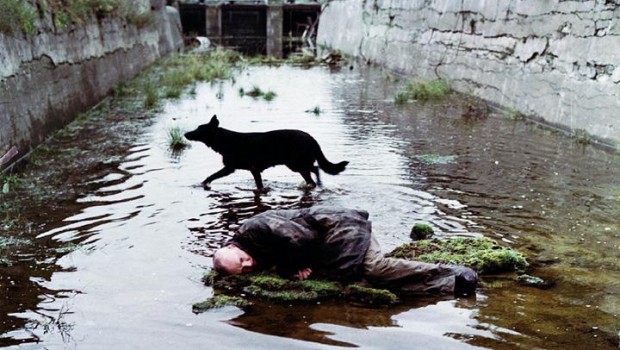


 shutter speed motion blur[/caption]
 Waterfall - 5 Second Exposure (Shutter Speed) - A long Shutter Speed[/caption]
 Shutter speed: 1/1600th second (a fast shutter speed)[/caption]
 Shutter speed and its effects on exposure and brightness[/caption]
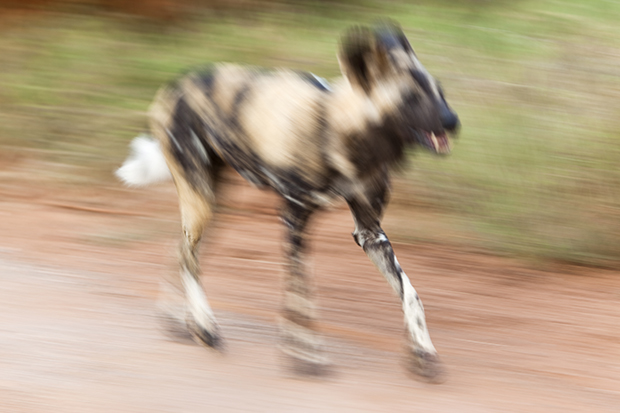 The image is blurry cause a long 1/10th second shutter speed is used[/caption]
 Shutter speed adjust Canon[/caption]

